

The Religion That Was Stolen From You
You deserve better. You have always deserved better.

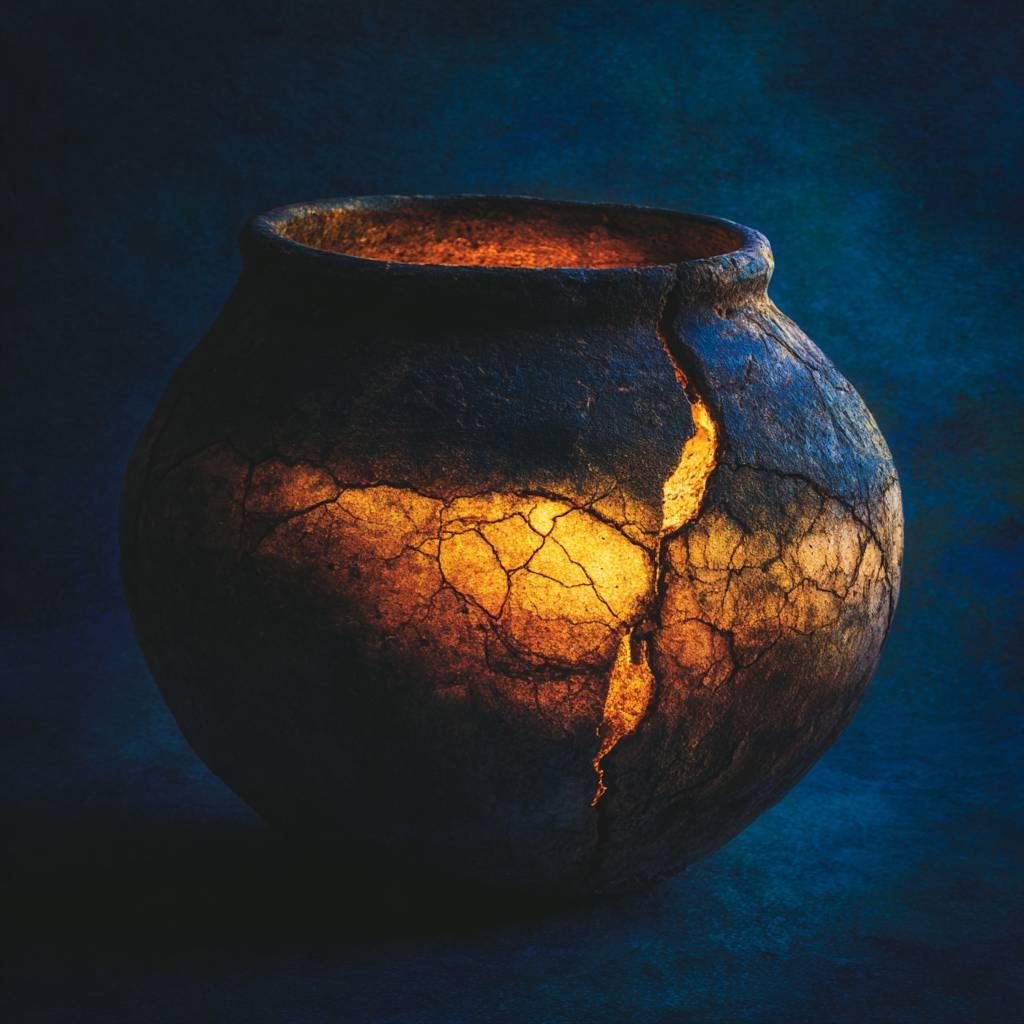
THE RELIGION THAT WAS STOLEN FROM YOU
Today is the first day of Ramadan.
And I want to talk about something that might make some of you uncomfortable.
I want to talk about religion.
Not the religion that hurt you. Not the religion that was used to manipulate you, control you, shame you, and finally silence you.
I want to talk about the religion that was stolen from you before you even had a chance to know it.
You deserve better. You have always deserved better.
THE WOUND IS REAL
Let’s be honest about something first.
The pain is real.
People have been genuinely wounded by religion. Abused by it. Gaslit by it. Used as pawns in other people’s political and institutional games while being told it was God’s will.
I’m not here to minimize that.
If you walked away from religion because it broke something in you, I understand. And I’m not going to sit here and tell you that you were wrong to leave.
But I *am* going to ask you a harder question.
Did you leave religion? Or did you leave *a corrupted version* of it?
Because there’s a difference. And that difference matters more than almost anything I could say to you today.
THE BANDAGE
Here’s what I see happening, and I say this with love.
A whole generation or two or three has decided: “I’m not religious, I’m spiritual.”
And I get it. I really do. That move makes sense. You’re trying to keep the light and throw away the cage. You want the depth without the dogma. The connection without the corruption.
But here’s what I want you to sit with.
That phrase—*I’m spiritual but not religious*—is a bandage.
It’s a real bandage. It covers a real wound. And for a season, a bandage is exactly what you need.
But a bandage is not a destination. You can’t live on a bandage forever. At some point, the wound either heals or it doesn’t.
And here’s the thing about trying to be spiritual without any form, without any tradition, without any community, without any practice that connects you to something larger than your own preferences:
It tends to stay vague. It tends to shrink. It tends to disappear, slowly and quietly.
Until one day you realize the fire has gone out and you don’t quite know when it happened or why it happened. And you find yourself saying things like, “Nobody really knows anything.”
And yet the hunger and the yearning never go away. That’s a clue for you.
RELIGION SPRINGS FROM SPIRIT
There is a real misunderstanding between religion and spirituality that needs to be cleared up.
Religion is a vessel for spirit.
A vessel gives something formless a place to live, a way to move, a means to reach you. At its best, that’s what religion has always been.
Religion doesn’t create spirit.
Spirit creates religion.
Religion is what happens when human beings—across every culture, every era, every corner of the earth—try to respond to the overwhelming mystery and majesty of the sacred. They try to give it shape, try to pass it on, try to build a container strong enough to carry something that can never be fully contained.
That’s what religion *is*, at its root.
It is the human species’ most ancient and most serious attempt to stay connected to the Source of everything.
The mystics knew this. The prophets knew this. The great poets and sages and saints of every tradition knew this.
Religion begins in spirit. And at its best, it ends in spirit. Everything in between—the practice, the ritual, the community, the law, the story—all of it is meant to be a path back to that original Source.
WHAT TOXIC RELIGION DOES
So what goes wrong?
What turns something that sacred into something so destructive?
People who crave control use religion to extend their control over others.
They have no understanding of spirit.
In their hands, religion is cut off from spirit and becomes a toxic version of itself in one catastrophic stroke. A zombie religion, you might say, that operates a headless and heartless religion.
Toxic religion keeps the shell. It elevates the authority and institutional power. It drains the language and hardens the rituals. It hollows out the interior. It replaces the search for truth with the demand for compliance to dogma. It replaces the cultivation of the community with the management of behavior. It replaces the living Creator with a set of rules that conveniently serves whoever is holding the rulebook.
And it uses the name of the Creator to do all of it, so that many come to believe anything associated with this name must be toxic and abusive.
That is the deepest betrayal. Not just of you. Not just of the tradition. But of the sacred itself.
Toxic religion doesn’t just hurt people. It obscures the divine. It puts a dark curtain between you and your Creator.
Now you can’t feel any of it. You can’t understand any of it. You can’t find any value in it.
No wonder people cut their losses and walk away. No wonder people run. No wonder people look down on it and pity the people who are still in it.
WHAT NOBLE RELIGION DOES
This might be the hardest thing to believe, but…
Noble religion is still available despite the abuses of toxic religion.
Your noble religion is there waiting for you to free it from the cage of toxic religion.
Noble religion does things toxic religion will never do.
Noble religion has always done these things, in every tradition, in every age, for those willing to do the real work.
Noble religion restores your agency.
It says: “You are not a passive recipient of someone else’s salvation. You are a traveler. You have a path. And you are responsible for walking it.”
Noble religion builds real community.
Not the community of conformity, where everyone must look the same and think the same and silence the same doubts. But the community of the journey, where people hold each other accountable, challenge each other to grow, and refuse to let each other shrink into smallness.
Noble religion keeps the search alive.
The search for truth. The search for goodness. The search for beauty. That ancient, restless, irrepressible human hunger to *know*—not just to believe, but to *know*—what this life is all about and what lies beyond it.
Toxic religion gives you a cage and makes you starve inside it.
Noble religion gives you a compass, a path, and a magical lunchbox that always has food in it, made just for you.
RAMADAN
Today is the first day of Ramadan.
And Ramadan, for me, is one of the clearest examples of what noble religion looks like when it’s actually working.
Think about what this practice asks of you.
It asks you to voluntarily give up something: food, drink, comfort, and distraction. Not because you are being punished, but because you are being invited. Invited to feel the hunger that’s always there beneath the surface. The hunger that no food can fill. The longing that no distraction can quiet.
It asks you to slow down enough to actually hear yourself think. To hear your own soul.
It gathers an entire community, across nations, cultures, languages, into a shared rhythm. A shared practice. A shared remembrance.
And it ends in a feast. In gratitude. In celebration.
That is religion doing what it is supposed to do. Connecting you to yourself, to each other, and to the One who made you.
LIVING RELIGION
So here is what I want to leave you with today.
If religion hurt you, I see you. That wound is real, and it deserves to be addressed, treated, and healed.
So don’t let the people who corrupted something sacred have the final word. Don’t hand them that victory.
The religion that was stolen from you—the living, breathing, soul-nourishing, community-building, truth-seeking, goodness-honoring, beauty-admiring kind—still exists. It is still here. It has always been here, even when it was buried under centuries of abuse and rot.
You deserve better. You deserve to have your noble religion restored to you. It is your inheritance. It is your birthright.
Ramadan Mubarak.
Now let’s go find it.
—Rahim
MY BOOKS FOR RAMADAN

